
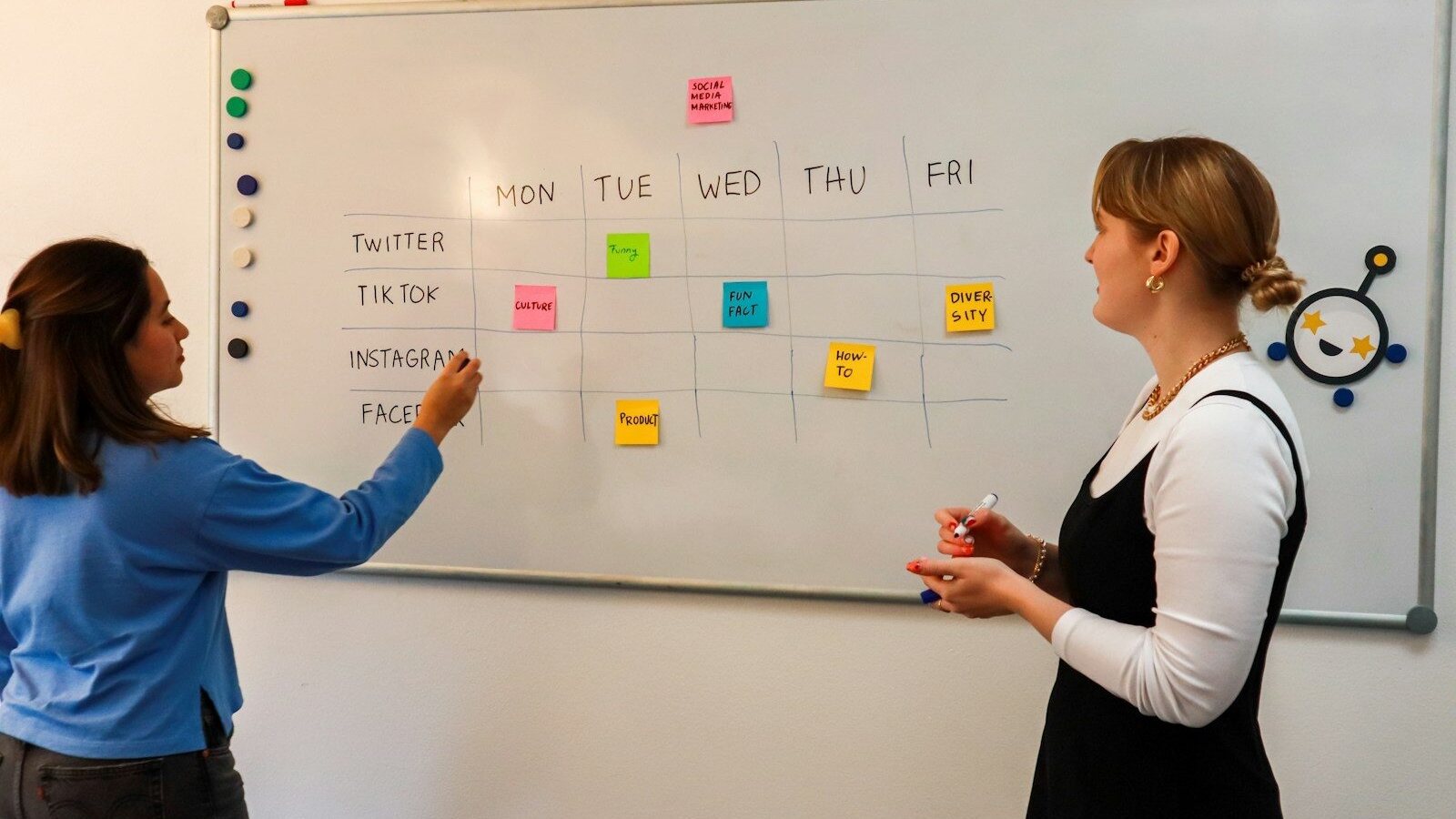
Building an effective SEO content calendar for small businesses is one of the most practical ways to turn SEO from a random activity into a predictable growth system. Many business owners publish blog articles when inspiration strikes, but inconsistent publishing rarely creates sustainable organic traffic, rankings, or leads.
A content calendar provides structure. It helps businesses prioritize topics, align content with buyer intent, support service pages, and create a roadmap that supports long-term search visibility. Rather than wondering what to publish next, your business follows a documented strategy focused on revenue-generating opportunities.
Companies seeking consistent organic growth often combine content planning with professional SEO strategy and search marketing services to ensure content supports broader business objectives.
Who This Article Is For
This guide is designed for:
- Small business owners
- Marketing managers
- Professional service firms
- B2B companies
- Startups building organic visibility
- Businesses looking for predictable SEO growth
What Is an SEO Content Calendar?
An SEO content calendar is a planned schedule of content topics, publication dates, target keywords, and business objectives.
Instead of creating content reactively, businesses map content production weeks or months in advance.
A well-developed calendar typically includes:
- Target keywords
- Search intent
- Content type
- Publishing schedule
- Internal linking opportunities
- Target service pages
- Primary conversion goals
The result is a content program that supports rankings and lead generation simultaneously.
Why Small Businesses Need a Content Calendar
Many small businesses struggle with SEO because content creation lacks consistency and direction.
Common challenges include:
- Running out of content ideas
- Publishing irregularly
- Targeting the wrong keywords
- Creating duplicate topics
- Ignoring buyer intent
- Weak internal linking structures
An SEO content calendar helps solve these issues by creating a repeatable system.
Businesses that plan content strategically often achieve stronger long-term organic growth than businesses focused solely on publishing frequency.
The Business Impact of Strategic Content Planning
When content is aligned with business goals, it can support:
- Organic traffic growth
- Lead generation
- Brand authority
- Service page visibility
- Customer education
- Sales enablement
- Long-term content assets
Every article should contribute to a broader objective rather than existing as an isolated piece of content.
Start With Services, Not Keywords
A common mistake is building a content calendar entirely around keyword volume.
Instead, begin with your services.
For example, a marketing agency may organize content around:
- SEO Services
- Google Ads Management
- Marketing Analytics
- Website Development
- Conversion Optimization
Each service becomes the foundation for a content silo.
This ensures content directly supports revenue-generating pages.
Build Content Silos Around Core Services
Search engines increasingly reward topical authority.
A content silo structure helps demonstrate expertise.
Example SEO silo:
- SEO Services Page
- SEO Audit Guide
- Keyword Research Guide
- Internal Linking Guide
- Technical SEO Guide
- Local SEO Guide
- SEO Reporting Guide
Every supporting article links back to the main service page while strengthening overall topic authority.
Match Content to Buyer Journey Stages
A successful content calendar addresses different stages of the buying process.
| Buyer Stage | Content Type | Objective |
|---|---|---|
| Awareness | Educational Articles | Attract traffic |
| Consideration | Comparisons and Guides | Build trust |
| Decision | Case Studies and Service Content | Generate enquiries |
| Retention | Resources and Updates | Strengthen relationships |
Many businesses create awareness content but fail to produce decision-stage content that converts visitors into leads.
A Practical Monthly SEO Content Calendar Example
Below is a simple example for a service business.
| Week | Content Focus | Goal |
|---|---|---|
| Week 1 | Educational Article | Traffic acquisition |
| Week 2 | Problem-Solution Guide | Lead nurturing |
| Week 3 | Industry Case Study | Trust building |
| Week 4 | Commercial Comparison | Lead generation |
This balanced approach supports multiple stages of the customer journey.
How Many Articles Should Small Businesses Publish?
The ideal publishing frequency depends on resources and competition.
For most service businesses:
- 2-4 quality articles per month is a realistic starting point
- Consistency matters more than volume
- Quality matters more than publishing frequency
- Topic relevance matters more than article count
A smaller number of highly targeted articles often outperforms a larger volume of low-value content.
Include Internal Linking Opportunities
Every content calendar should include internal linking plans.
Each article should connect to:
- Relevant service pages
- Related articles
- Case studies
- Resource pages
- Contact pages
Strong internal linking improves SEO performance while guiding users toward conversion opportunities.
Businesses often combine content planning with structured SEO content strategy services to maximize authority flow.
Common SEO Content Calendar Mistakes
Publishing Without Strategy
Creating content without business objectives often produces weak results.
Ignoring Search Intent
Traffic alone does not generate revenue.
Creating Isolated Articles
Content should support broader topic clusters.
Focusing Only on Awareness Content
Businesses frequently neglect commercial and decision-stage content.
Skipping Internal Linking
Articles should strengthen important service pages.
Not Measuring Performance
Content calendars should evolve based on actual results.
How to Diagnose Whether Your Content Calendar Is the Problem
You may have a planning issue if:
- Publishing is inconsistent
- Content topics feel random
- Traffic growth is slow
- Leads remain stagnant
- Service pages lack support content
- Content duplication exists
- No clear topic clusters are present
Many businesses struggle with SEO not because of poor content quality, but because content lacks structure.
What MetaLabs Would Check First
Before creating a content roadmap, MetaLabs typically reviews:
- Business goals
- Target services
- Keyword opportunities
- Current content inventory
- Content gaps
- Competitor coverage
- Internal linking structure
- Conversion pathways
- Lead generation objectives
This ensures content planning supports business outcomes rather than vanity metrics.
Many businesses review SEO case studies and client results before investing in structured content planning.
When Should You Hire an SEO Expert?
Professional support becomes valuable when:
- You lack a content strategy
- Traffic growth has stalled
- Competitors dominate search visibility
- You struggle to prioritize topics
- Content is not generating leads
- You need a scalable SEO roadmap
An SEO strategist can help identify opportunities, prioritize content creation, and align publishing efforts with measurable business goals.
Frequently Asked Questions
What does SEO content calendar for small businesses mean for a business owner?
An SEO content calendar is a structured publishing plan that organizes topics, keywords, timelines, and business goals. It helps businesses create consistent content that supports traffic growth and lead generation.
Why does SEO content calendar for small businesses matter for growth, revenue or lead quality?
A content calendar ensures content supports buyer journeys, service pages, and keyword opportunities. This improves organic visibility while creating more opportunities to generate qualified enquiries.
What are the most common mistakes businesses make with SEO content calendar for small businesses?
Common mistakes include publishing without strategy, targeting irrelevant topics, ignoring buyer intent, skipping internal linking, and failing to align content with services.
How can a business diagnose whether SEO content calendar for small businesses is the real problem?
If content appears random, publishing lacks consistency, traffic growth is limited, or content generates few leads, a weak content planning process may be contributing to the issue.
When should a business hire an expert instead of handling SEO content calendar for small businesses internally?
Expert support becomes valuable when businesses need keyword prioritization, competitive analysis, content silos, and a roadmap aligned with growth objectives.
How can MetaLabs help with SEO content calendar for small businesses?
MetaLabs develops content strategies, identifies keyword opportunities, builds content silos, improves internal linking structures, and creates publishing roadmaps that support long-term organic growth.
Turn Content Into a Predictable Growth Asset
An SEO content calendar is more than a publishing schedule. It is a strategic framework that helps businesses create content consistently, build authority, support service pages, and generate qualified leads.
If you want a content roadmap tailored to your industry and growth objectives, explore our SEO consulting services, review our client success stories, or contact MetaLabs for a content strategy consultation.
Not sure why your marketing is not converting?
⬆️ Get a senior growth review ⬆️
MetaLabs can review your campaigns, tracking, landing pages and conversion journey to identify where budget is being wasted and what should be fixed first.